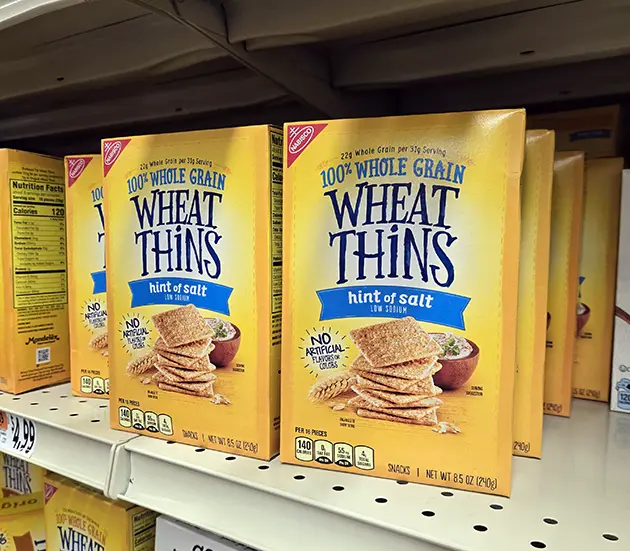
The $10 million Wheat Thins settlement resolved allegations about the “100% Whole Grain” label and paid approved claims in January 2026. Claims closed July 7, 2025, and claimants report a second payment of about $49 on September 11, 2026.

Current Status
Claims are closed and the deadline was July 7, 2025. The court granted final approval and entered final judgment on December 12, 2025, and a post-distribution accounting was filed on July 31, 2026. No new claims are accepted.
A second round of payments is reaching approved claimants. Class members report receiving about $49 on September 11, 2026, following a much smaller first payment in January 2026 — the supplemental pro rata distribution the final approval order scheduled for funds left over after the initial distribution. The court record behind it is set out here: Wheat Thins settlement second payment.
Approved no-proof claims were scheduled at $4.50 per household, while documented claims started at $8 and could reach $20, subject to validation and any proportional adjustment required by the net fund.
What the Lawsuits Alleged
The lawsuits alleged that labeling certain Wheat Thins products as 100% Whole Grain was false or misleading because the crackers also contained enriched flour or other grain ingredients that consumers would not expect from the prominent representation. Plaintiffs claimed purchasers paid for products based on that understanding.
Mondelez International, Mondelez Global, and Nabisco denied the allegations and denied wrongdoing or liability. The settlement resolved the cases without a trial or a finding that the product labels violated the law.
Free settlement alerts
Get notified when new class actions open to claims
Join thousands of readers who get the latest class action settlements you may qualify for — delivered straight to your inbox.
Products and Class Period
The settlement covered Original Wheat Thins, Reduced Fat Wheat Thins, Sundried Tomato and Basil Wheat Thins, Big Wheat Thins, Ranch Wheat Thins, Hint of Salt Wheat Thins, Cracked Pepper and Olive Oil Wheat Thins, and Spicy Sweet Chili Wheat Thins when the package bore the challenged 100% Whole Grain representation.
The class generally included adults in the United States and its territories who bought a covered product for personal use, rather than resale or distribution, from October 13, 2018, through May 9, 2025. A purchase of another Mondelez cracker or a Wheat Thins variety without the covered representation was not included merely because the brand was similar.
Cash Payment Tiers
A valid claim without proof of purchase was scheduled to receive $4.50 per household. A claim with proof started at an $8 household minimum and added $0.15 for each documented unit above the amount represented by that minimum, up to $20 per household.
Receipts or other acceptable purchase records had to identify covered products sufficiently for the administrator to validate the documented tier. A claimant could not combine multiple forms or household members to exceed the household cap.
The listed amounts were subject to the settlement fund. If approved claims and authorized deductions exceeded available funds, payments could be reduced proportionally. Filing a form therefore did not guarantee the maximum.
The $10 Million Fund
The settlement created a $10 million fund for class payments, notice and administration, court-approved attorneys' fees and expenses, and service awards. It was not a $10 million pool divided only among shoppers.
The court reviewed the settlement and related requests before entering final judgment. The later post-distribution accounting provides a public record of how administration and payments concluded. That filing is stronger evidence of the current stage than the older homepage language that still describes relief conditionally.
Labeling Changes
The settlement also required business-practice relief. Mondelez agreed not to use the 100% Whole Grain representation by itself, or immediately before the Wheat Thins brand name, without additional qualifying language on covered packages.
The change is forward-looking and does not mean every Wheat Thins product is made solely from one flour. Consumers should read the current ingredient list and nutrition information when the composition matters to them.
What Claimants Should Keep
Claimants should retain their confirmation, proof submitted, payment notice, and transaction record for their own files, and should watch the account or address that received the January 2026 payment. Open Class Actions cannot reopen a denied claim, reissue an expired payment, or change the payment method.
A message offering a new Wheat Thins settlement claim after the deadline is not the court-authorized filing process. The official site remains available for the judgment, accounting, agreement, notice, and historical deadlines.